Once you settle on “PATRIKA VILLAge” you have multiple options for excursions in the Land of Mastiha.

Mastichochoria are  hiding unique beauty and  surrounded by beautiful beaches.

Each Mastichochorion has its own beauty and uniqueness that remained unchanged over the centuries. See everything, try to involve yourself ne with the locals, let the air and the aroma of Chios to overwhelm you.

But time is relentless and unstoppable, so I will propose two trails where you will see all the hidden secrets of southern Chios and then introduce you as best as I can these superb places:

ROUTES
The road network is going around mastiha land and connected in various points enclosing the Mastichochoria. Thus you will never get lost. I would suggest two routes which you can combine however you like:

ROUTE No1:

Leaving Patrika, turn left to highway and after three minutes through the village Kalamoti. Cross Kalamoti to reach Armolia village, where you can make a stop to buy the famous pottery and ornamental which being made by local crafts.

Heading south, as soon as you exit the village Armolia turn right at the first exit following the road for Vessa, Elata, Lithi, Avgonima, Anavatos.

The first village you meet is Vessa. There you turn left to Elata  to visit another picturesque Mastichochori and swim in there duo beaches, Potamoi and Agia Irini.

Returning to Vessa suggest buy your handmade pasta and snack from famous local company “Pasta Chios” of Bros Konstadoulakis.

Proceed towards Noth-West to Lithi. The beach Lithi is a lovely shallow beach for children and surrounded by beautiful taverns with fresh fish.

After Lithi follow North direction and will encounter Elinta Bay, and the magic “Elinta Beach”. On the way to the village Avgonima will also find the beaches Trachili and Makria Ammos. Enjoy a drink, coffee or lunch in the village square Avgonyma and do not miss the beautiful sunset. A little northern of Avgonima is the preserved village Anavatos. Near Anavatos and a little further to the  north, near the village Sidirounta lies Tigani beach.

ROUTE No2  :

After the downhill from the square of our village (Patrika) turn left following the road that leads to the beautiful pebble beach Lilikas. Make one refreshing dip there and continue west to Komi. Komi is a huge organized sandy beach. There you will find beach bar, cafe serving on the beach and sunbeds.

Right outside Komi, you will see a sign to the left (direction west-ND) to”Emborios”. Follow the main road and at the end of that road turn left where after 300 meters you will find the picturesque harbor of Emporio with lovely restaurants and taverns. Further down is the beautiful beach “Mavra Volia”.

Leaving Emporio follow the road to “Pyrgi”. Left you will meet and sign a detour leads to the beautiful “Vroulidia” beach.

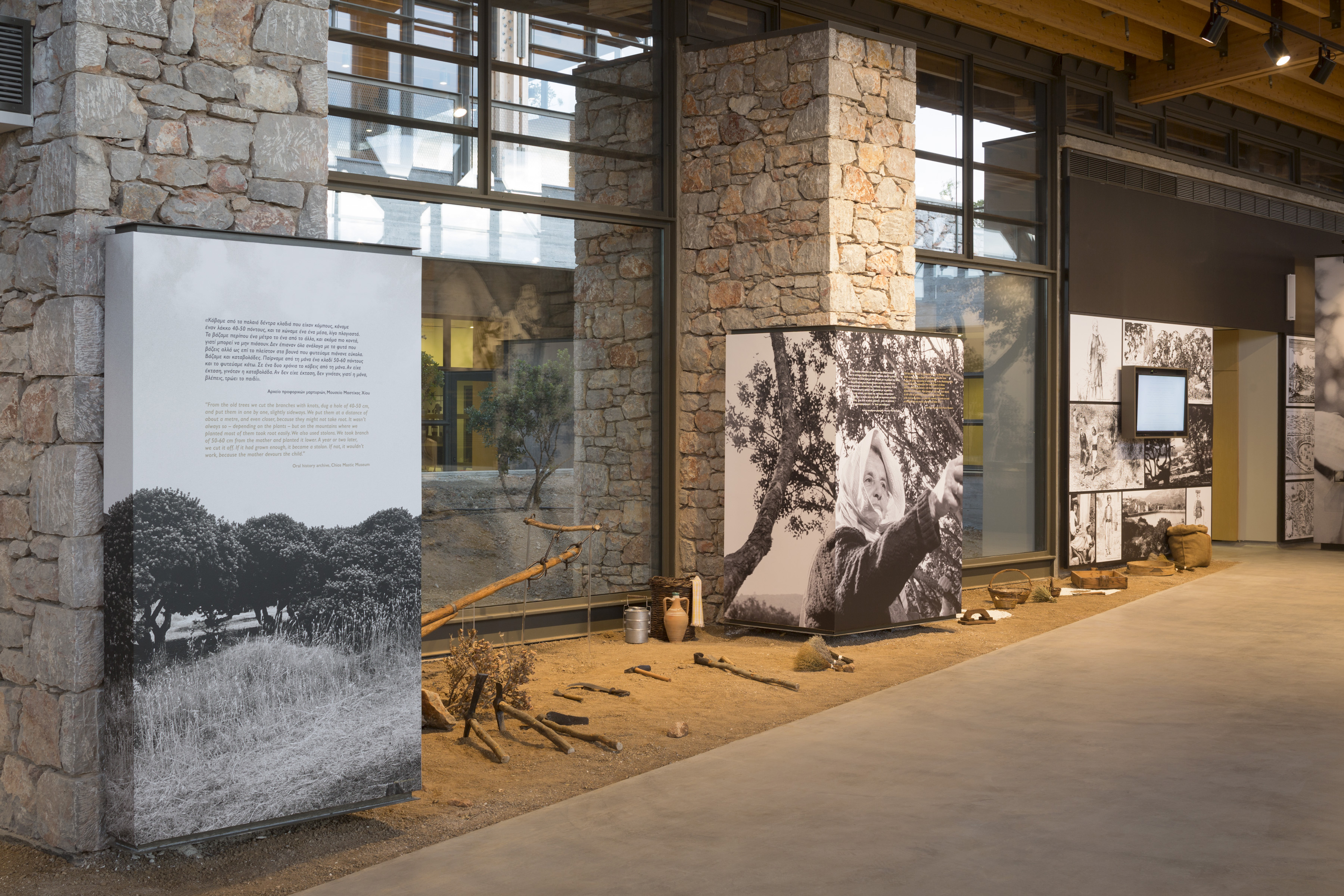
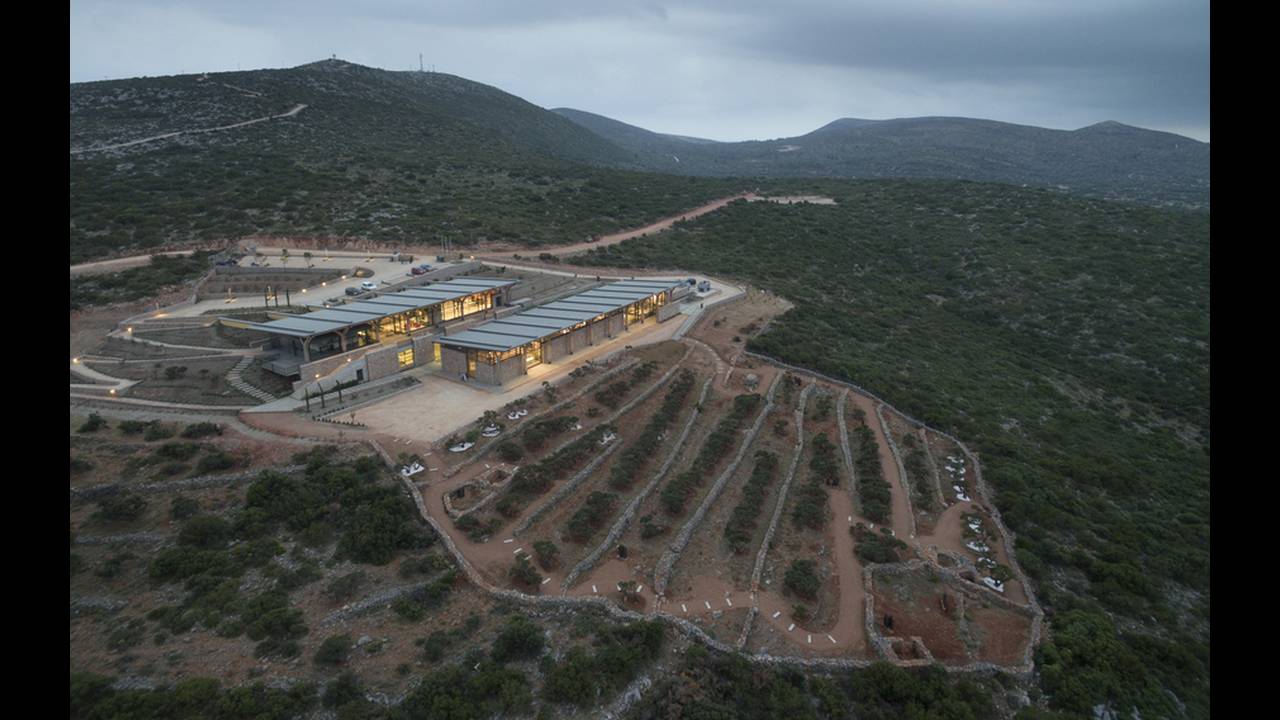
Before you reach the highway near Pyrgi, do not forget to stop at ornament of  South Chios, the “Mastiha Museum”  which you will find across in your left arm. There you will learn the history of Mastiha, the cultivation process.  You will see the traditional tools, you will experience the habits of the people and feel the aura emitted by the :Land of Mastiha”.
Do your shopping from Mastihashop !!

After Mastiha Museum and head downhill to Pyrgi. After a while you reach the junction with the highway and immediately left is the entrance to the famous village “Pyrgi”. The picturesque squares and wonderful “scratches”  certainly will amaze you.

After visiting Pyrgi, follow again the road with south direction.

Shortly after you exit Pyrgi, you will encounter an output left that leads to the beach “Kato Fana” and “Karinta”.

From the above mention point , continuing will come across another beautiful castle village Olympi with a great square for coffee or lunch. Before Olympi on your right take exit where you’ll see related signs to the perfect cave of Olympi. Just below the cave lies the lovely beach “Agia Dynami”.

Return. After your tour to Olimpi follow the road with South direction. Just outside the Olympoi on your right you will see a road that leads to the lovely “Salagona” beach.

Continuing always heading South -West you  will get to Mesta, probably the most famous castle village of Chios. A little further south of Mesta, is the Port of Mesta “Pasalimani” with nice restaurants.

Before Mesta on your left hand there is a sign leading to the wonderful beach “Avlonia” and further along the beautiful beach “Trachili” and the beach which is Mesta trademark for the locala “Apothika”.

PLACES


CHIOS MASTIC MUSEUM

The Chios Mastic Museum is located in Southern Chios, in the region of the Mastichochoria. The present act has as its object the elaboration of the museum shell and the surrounding area and the installation therein of a permanent exhibition and the complementary / auxiliary areas and services, as well as the information and publicity actions regarding this project. The permanent exhibition is centred on the gum mastic of Chios as a unique product. It aims to chart the technique of the gum mastic tree’s traditional cultivation, and to present the product’s history, the evolution of the pre-industrial and industrial technology for the production, exploitation and marketing of gum mastic, as well as to showcase its different uses.

ANAVATOS VILLAGE

It is built on a rocky elevation with sides so steep it can only be approach from one point. The natural defenses of the site make it probable it was originally founded to control the island’s west coast during the period of piracy. The village is now completely deserted but the overall shape of the settlement is quite well-preserved to give a unique picture of a ghost town surrounded by a wild and rough natural environment.

PYRGI VILLAGE

 Is one of the most beautiful villages of Chios. Features that make the village unique (is also called the “painted” village) are the black geometric decoration of the exterior walls of houses “scratch” as they are called. This is a technique by hand, carving geometric patterns in black and white. It is also a medieval village with narrow streets, numerous churches and the Byzantine Church of the Agioi Apostoloi of the 13th century. The houses are tightly built to each other to form a compact structure. The streets are cobbled and narrow. Pirgi has become a preservable monument. It’s residents mainly live on mastic. Accommodations, cafes and excellent taverns are available in the village.

OLYMPOI VILLAGE

Ιt is a medieval village of the 14th century and is located 31 km South West of the town of Chios, 6 km from the Pirgi on the way to Chios. The architecture is equivalent to Mesta but with obvious changes during the passage of time. It is also proclaimed as a preservable monument. The houses are built in such a way that the outer walls are conjoined, so that anyone facing the village will see a fortress with no visible openings, except for one door that allows people in and out of the village. Tourist facilities such as traditional apartments are situated within Olympi village. Some of the old traditional houses have been renovated and turned into guesthouses, to give visitors a feel of the traditional charm.The nearest beaches to Olympi are Didima, Mavra Volia and Agia Dynami.

THE CAVE AT OLIMPOI

The cave of Olympi (also known as cave Sykia) is located on the South part of Chios island, near Olympi village and not far away from Pyrgi and Mesta villages. It was explored in 1985 by the Hellenic Speleological Society and it is open for public since 2003.

It is located 100 meters above sea level and its maximum depth is 55 meters. Although the cave is relatively small, its interior full of stalactites and stalagmites is exceptional, making it one of the best of its kind in Greece.

The dimensions of the main room of the cave is about 30×30 meters. There are some smaller rooms around it. The roof is covered with stalactites but the most impressive part of the cave is the stalagmites. Furthermore, thanks to the air flows inside the cave, there are eccentrites in it (a kind of stalactite that does not develop vertically) – and they almost look as if they defy the law of gravity!

After the radiocarbon dating of several samples of carbonate material from the Olympi cave, it was estimated that the oldest of them was created 230 thousand ago. The creation of the cave itself is difficult to estimate. Chances are that it began forming 1 to 5 million years ago

It is worth noting that the Olympi cave is still active even today. The formation of stalagmites and stalactites has not stopped. That is why human intervention must not affect the micro-climate inside the cave. Hence the double door entrance system for visitors which stops any air currents from outside. The temperature (18 degrees Celsius) and humidity (95%) within the cave remain almost constant throughout the year, while the water drop flow varies. The stalactites and stalagmites of the cavern are created by the chemical deposition of calcium carbonate from the rain water entering the cave.

The sun rays, entering from the cave ‘s natural entrance of the roof, combined with the colors of the cave (red, yellow and white), make for a stunning view.

The cave is open for public visiting from May to November everyday except for Monday, 11:00 to 18:00. For more information about visiting times call 22710 93364

MESTA VILLAGE

Mesta is the furthest from the medieval villages, but also the most well preserved. The form of the village and its architecture is totally unique. The houses are built side by side with no gaps, leaving only two main gates to the village. The streets are narrow and most are covered with arches on which houses are built. The whole village has been designed and built as a labyrinth in order to prevent the raiding parties of pirates can easily reach the center of the village where the main buildings are. The oldest monument of Mesta (other than the village it self) is the church of the Paleos Patriarchies. The inhabitants of the village are also preserving their traditional customs and traditions. Accommodations, cafes and taverns are available at Mesta.

NEA MONI MONASTERY

The Nea Moni was built in the 11th century (between 1042 – 1056) and was dedicated to the Assumption of the Virgin Mary. It covers an area of approximately 17,000 m2 and is located in the central region of the island of Chios. The buildings comprising the Nea Moni Monastery include the main church (catholicon), 2 smaller churches, a table or trapeza which was the monks’ dining area, the monks’ quarters (kelia) and underground tanks (kinsternes) that were built to collect water. In the northwest corner of the Monastery, there stands a strong defensive tower. A tall, stone-wall surrounds the complex of the Monastery.

According to monastic tradition, the Emperor Constantine Monomachos founded the Monastery to repay three Chian monks for predicting that his banishment to Lesvos was temporary and he would eventually return to the throne. The three monks discovered the miraculous Icon of the Virgin Mary hanging on a branch of myrtle at the Monastery’s current location. This was where they originally built the small church with a few quarters. The Emperor Constantine Monomachos provided the Monastery with property and revenues, a rare practice for the Byzantine financial system.

The Nea Moni Monastery became one of the wealthiest and most well known monasteries in the Aegean. This prosperity continued until the Turks occupied the island in 1822 and looted the Monastery, henceforth the beginning of its financial decline. The main church or catholicon is located in the central point of the Monastery. It is comprised of a main church, the esonarthex and the exonarthex. The architecture of the main temple is the well-known “island” octagonal type. The only examples of this architecture in existence today are in Chios and Cyprus. The other buildings contained within the limits of the stone walls include: The Temple of the Holy Cross – a small temple built on the side of the entrance gate, which stores the skeletal remaining of the martyrs and fighters of the Massacre of Chios.

The Temple of Agios Panteleimonas – a small temple on the right side of the road that leads to the Tower. It is dated around 1889.

The Museum – the exhibition of the relics of the Monastery was opened to the public in 1992.

For more information, here are some links of webpages that specialize in providing useful information to visitors / tourists who decide to spend their holidays in Chios, Aegean Princess. :

Chios Travel Guide 

Explore Chios

Chios Net